The Practice
What yoga
does for you.
A complete guide
More than a workout.
Yoga is one of the oldest continuous practices on earth — a five-thousand-year-old system built around a simple idea: that body, breath, and mind are the same conversation. A consistent practice does not just make you more flexible or stronger. It quietly rewires how you carry stress, how you sleep, and how you meet the everyday.
What follows is not a list of promises. It's a plain look at what a modern, consistent yoga practice tends to give back — and why it works.
Physical
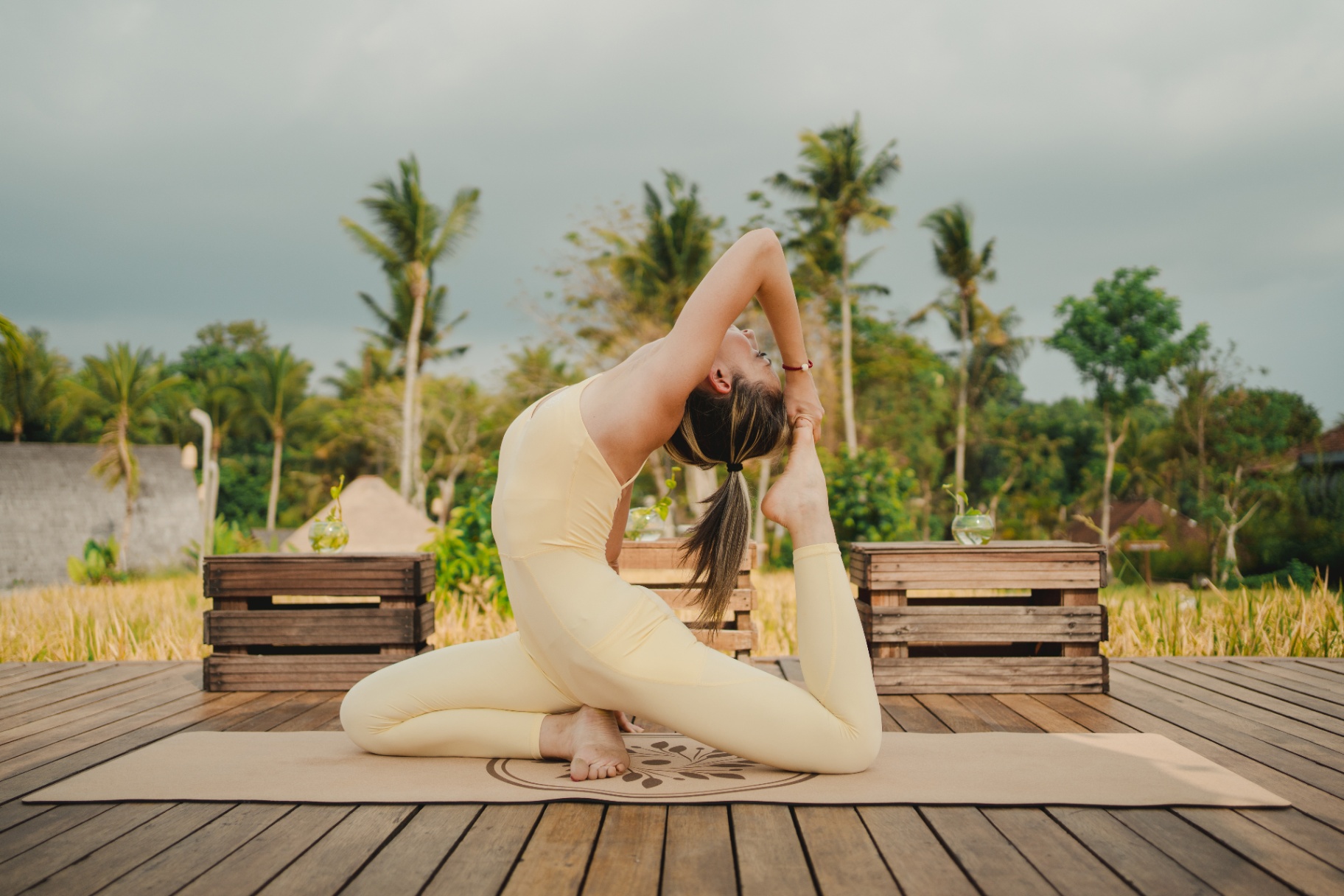
Strength, posture & pain relief.
Standing postures, arm balances, and slow transitions build long, integrated muscle — the kind that supports daily movement rather than just isolated lifts.
Regular flexion, extension, and gentle twisting keep intervertebral discs hydrated and mobile, which is strongly linked to reduced back pain in clinical studies.
Awareness of pelvis, ribcage, and shoulders trains the body out of the collapsed, forward-rounded shape most of us inherit from desks and phones.
Slow, weight-bearing movement lubricates joints and strengthens the surrounding tissue — protective for knees, hips, and shoulders as we age.
Mental
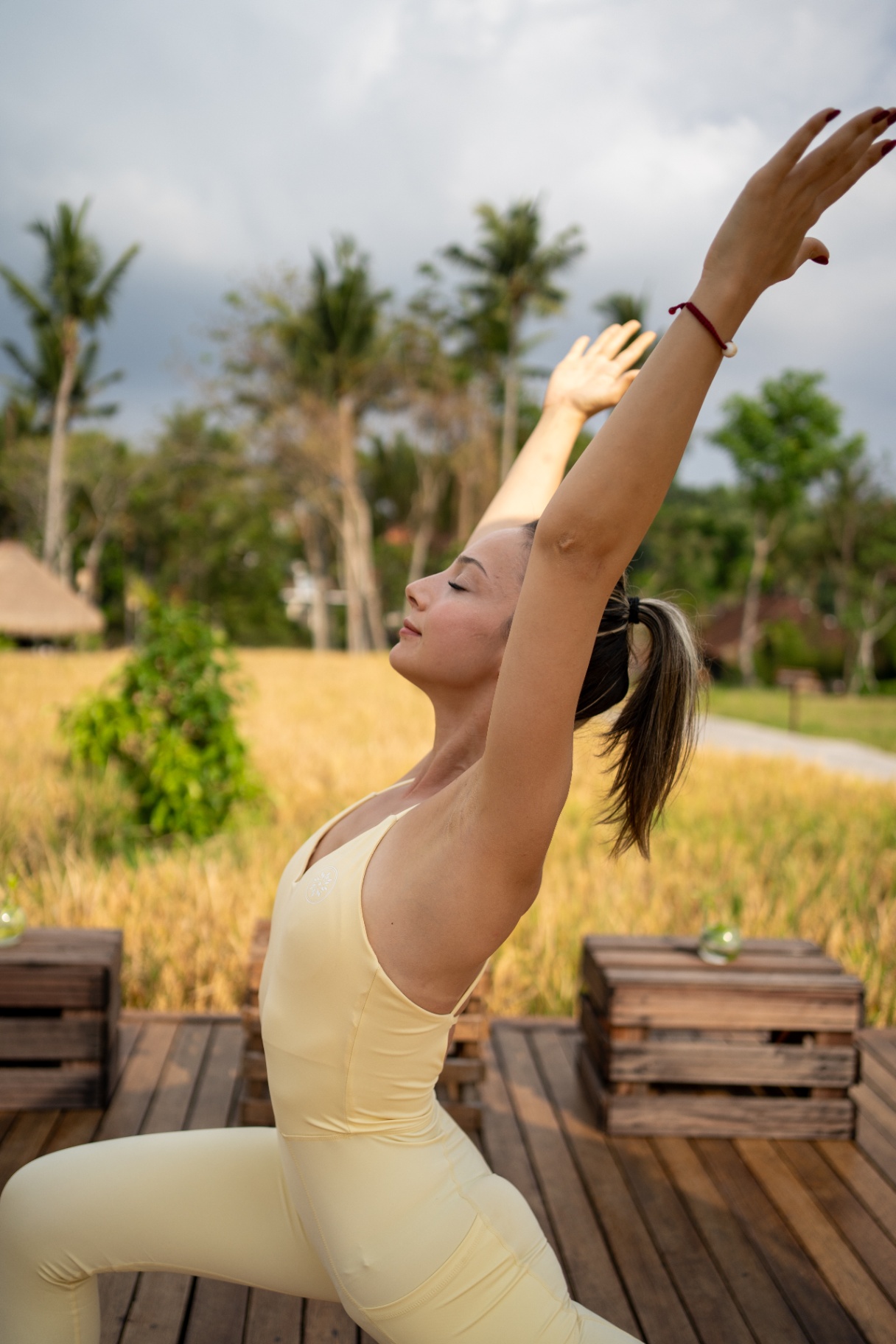
Calm, focus & a quieter mind.
Long exhales activate the parasympathetic nervous system, measurably lowering cortisol and heart rate within a single session.
Concentration on breath and alignment is a form of attention training. Practitioners consistently report clearer thinking and less mental clutter.
Evening restorative practice and breathwork reduce sleep-onset time and improve deep-sleep quality — even for chronic insomniacs.
Slow, structured breathing interrupts the panic loop. Yoga is now recommended alongside therapy for generalised anxiety in NHS-linked guidance.
Mobility
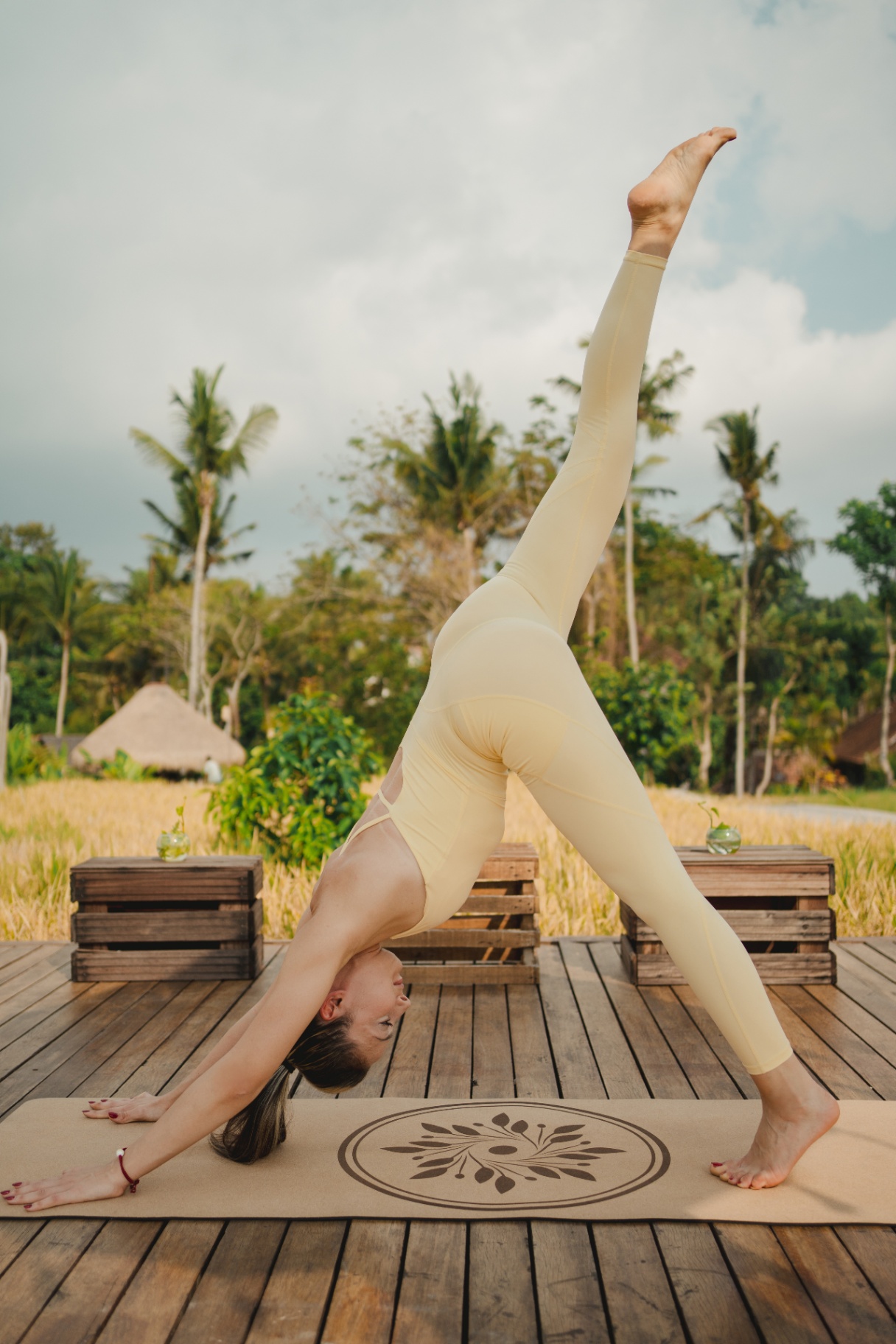
Flexibility that lasts.
The parts of the body most compressed by sitting are the ones yoga opens first — gently and safely, over weeks rather than days.
Simple sequences unwind the tension that lives above the collarbones — the source of most tension headaches.
Yin postures held for 3–5 minutes work into connective tissue, restoring glide and range that dynamic stretching alone cannot reach.
Balanced flexibility across the whole body — not just where you're tight — is the strongest predictor of staying injury-free in other activities.
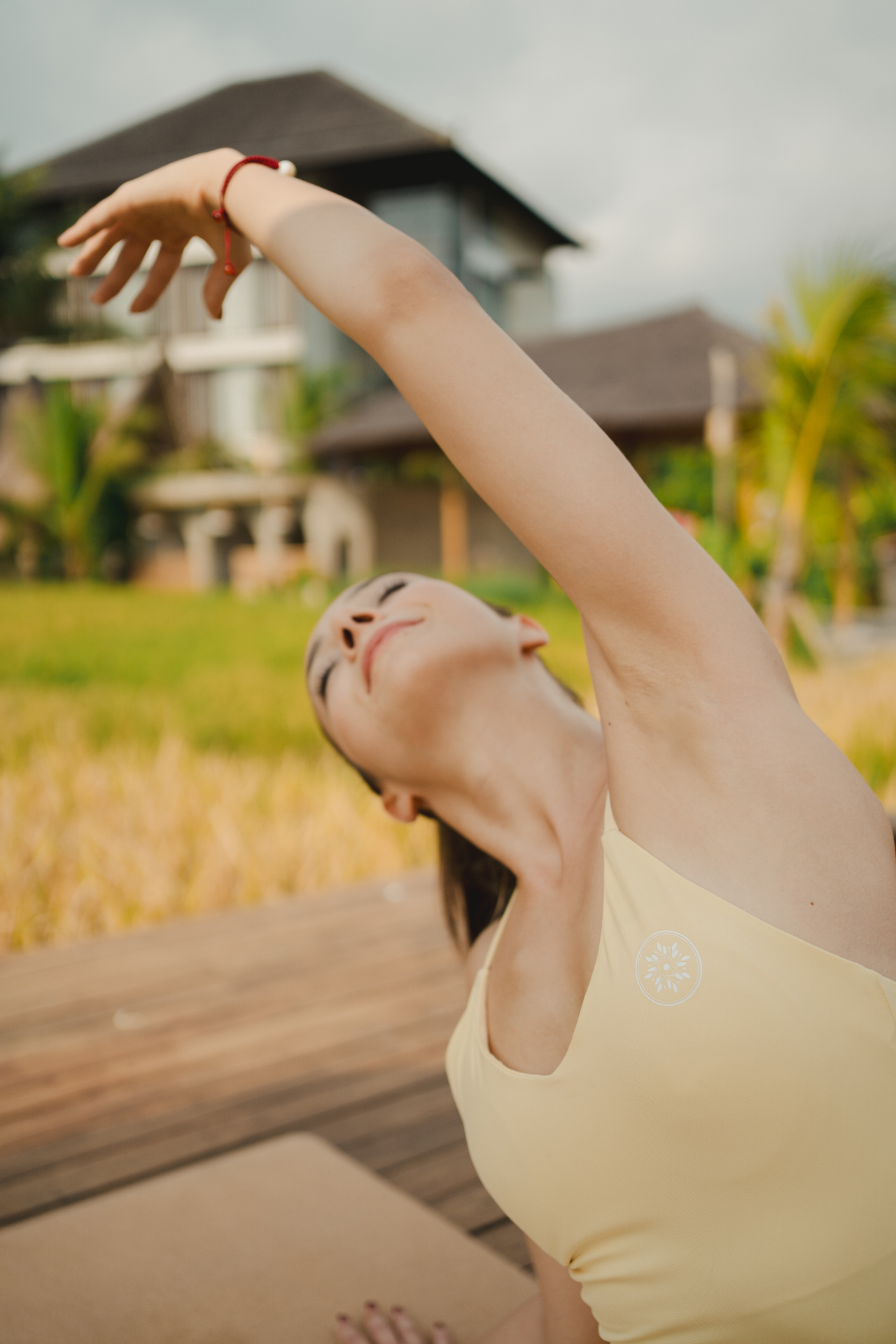
Breath
Pranayama — the hidden practice.
Deep diaphragmatic breathing measurably increases vital capacity — the volume of air your lungs can use — within weeks.
Alternate-nostril breathing balances sympathetic and parasympathetic activity, a rare tool for stepping out of fight-or-flight on demand.
Short, structured breath practices raise alertness and clarity without the crash. Many practitioners quietly cut back on coffee within a few months.
Learning to lengthen your exhale in a hard posture teaches you to lengthen it in a hard conversation. This is the real work.
What to expect
Your first year on the mat.
Yoga rewards patience. Here's a realistic sense of what a consistent practice — two to three sessions a week — tends to give back.
Almost every new practitioner reports deeper sleep within the first fortnight. It is often the first thing they notice.
Diaphragmatic breathing starts to feel natural — even off the mat, in the car, at your desk.
Low-grade back, neck, and hip tension you'd stopped noticing tends to quietly disappear.
You react differently to stress. You recover from hard days faster. This is the part that keeps people coming back.
Who it's for
Yoga meets you where you are.
You do not need to be flexible, calm, or spiritual to start. Yoga is not a test you have to pass to be allowed in — it is the thing that gets you there.
Melodiyoga classes are honest, unhurried, and always adapted. Every posture has a version for every body.
- ·Complete beginners who have never held a downward dog.
- ·Desk-bound professionals fighting posture and shoulder tension.
- ·Runners, cyclists, and lifters looking for balance and recovery.
- ·Pre- and post-natal practitioners (with modified sequences).
- ·Anyone returning to their body after injury, burnout, or a long pause.
Ready to begin?
Come to the mat.
The best time to start was ten years ago. The next best time is your next available Tuesday morning.
Book your first class →